Insurance and Safety for Commercial Waste Removal Uxbridge

Trusted, Insured Rubbish Company Services
When you engage a professional insured rubbish company for Commercial Waste Removal Uxbridge, you expect transparency, compliance and a measurable safety culture. Public liability insurance is the baseline protection that demonstrates a company's financial responsibility for accidental damage or injury arising from on-site operations. Our explanation below outlines what businesses should look for when assessing an insured waste removal company, how staff training and PPE requirements are managed, and the risk assessment process that underpins safe, legal waste handling.The most important insurance to verify is public liability insurance, which covers third-party injury or property damage caused by waste collection, transport or disposal. Look for clear policy limits, typically expressed as a monetary amount per incident and in aggregate annually. An insured commercial waste company should carry a certificate of insurance and be willing to disclose their insurer and policy number. In addition, confirm the insurer recognises the type of operations undertaken — for example, site-based waste clearance, bulky removal, or hazardous material handling — and whether hired plant and vehicle cover are included.
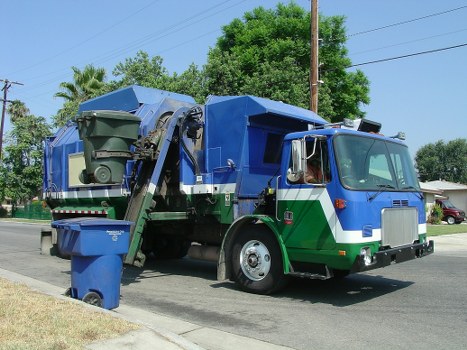 Choosing a fully insured waste removal company in Uxbridge means reviewing supplementary covers too. These often include employer's liability insurance for staff, goods-in-transit cover for items being moved, and environmental liability for pollution events. Key items to check include:
- Proof of public liability and employers' liability policies
- Evidence of vehicle insurance for commercial fleet operations
- Specialist cover for hazardous or controlled waste where applicable
Staff training forms the cornerstone of any safe, insured rubbish company. Competent waste operatives reduce the likelihood of incidents that might lead to third-party claims or fines. Training regimes should include induction training for new starters, regular refresher modules, and documented competence checks. Topics should cover safe lifting and manual handling, traffic management during collections, segregation of recyclable and non-recyclable material, and procedures for sharps or potentially hazardous finds. A well-run insured commercial waste company will keep training records for each employee and make those records available for client audits.
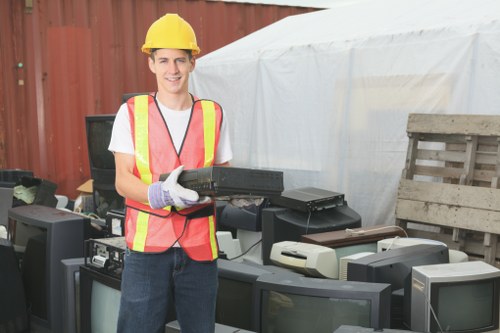
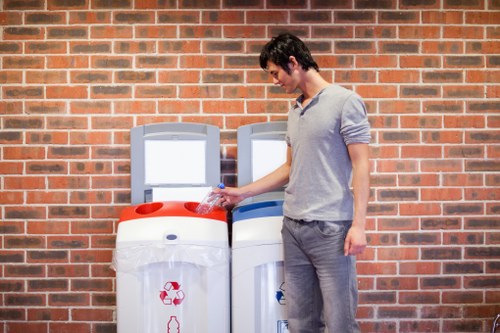 Personal protective equipment (PPE) is another visible sign of a professional, risk-aware waste service. PPE stock for a commercial waste operator typically includes high-visibility clothing, cut-resistant gloves, steel-toe footwear, eye protection and respiratory masks where dust or airborne contaminants are possible. Management responsibilities include issuing correct sizes, routine inspection of PPE condition, replacements when worn or damaged, and ensuring staff wear equipment consistently. PPE should never be an afterthought; it is an integral control measure recorded within the company’s safety management system.
Beyond initial training and PPE, ongoing competence is maintained through supervision, toolbox talks and scenario-based drills. An insured waste removal company will schedule periodic reviews, incident investigations and corrective actions to prevent recurrence. These activities are often linked to quality management or ISO processes and will be captured as part of the firm's continuous improvement records. When Commercial Waste Removal Uxbridge teams operate with these systems in place, clients benefit from reduced downtime, fewer on-site disruptions and lower risk of insurance claims.
Risk Assessment Process and Safe Systems of Work
Risk assessments are the systematic method by which an insured rubbish company identifies hazards, evaluates who might be harmed and decides on appropriate control measures. A thorough risk assessment for commercial waste operations will consider site-specific factors such as pedestrian routes, vehicle access, presence of asbestos or hazardous substances, weights and sizes of loads, and nearby utilities. The steps include hazard identification, risk evaluation, implementation of controls, and regular review. Controls can be engineering solutions, administrative measures or PPE. Documentation is essential: site-specific RAMS (Risk Assessment and Method Statements), lift plans for bulky items, traffic management layouts and emergency response procedures should all be prepared and shared before work starts. An insured waste removal company will maintain clear records that demonstrate compliance with the law and the terms of their insurance policies. These records support safer outcomes and make it simple for clients to check that the provider operates to a professional standard.
 In conclusion, selecting the right insured commercial waste company for Commercial Waste Removal Uxbridge means verifying comprehensive public liability cover, robust staff training programmes, consistent use and management of PPE, and a documented risk assessment process that produces safe systems of work. When these elements are in place, they protect client assets, staff and the general public while ensuring regulatory compliance. Businesses should ask for evidence of insurance, training matrices, RAMS and PPE policies as part of their procurement checks — these are the markers of a dependable, insured waste carrier operating in the Uxbridge area.
